
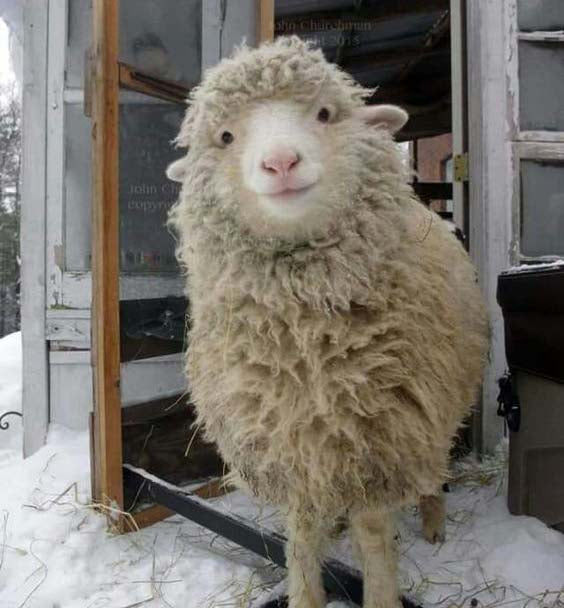
The origin of our merino wool and the cute sheep that make everything possible
By popular demand we are going to tell you something about the suppliers of our wool. Because, being the critics that our customers are: we have been bombarded with questions lately. And not only about sustainability in regard to our environment and the planet, but also about the welfare of the animals behind the scenes.
Tribute to you: You guys are not fooled easily and don't let yourself be fobbed off with the standard socially acceptable answers. Not that you can ever catch us on trying to do that, we are proud to deal with questions and requests in a slightly different way than usual. And we are also proud of you - dear, clever, critical customer - because you consume consciously and thus keep us extra sharp and focused. Have we flattered you enough yet :-)? Sustainable and respectful production consists of many different facets. Today in the spotlight: the sheep, bêêêhh.
WHERE DOES OUR WOOL COME FROM?
The yarn suppliers we work with source their wool globally and are certified under the RWS (Responsible Wool Standard). This standard guarantees animal welfare and sustainable land management in wool production. In general, it’s fair to say that most merino wool comes from New Zealand and Australia, cashmere from Mongolia, and yak from the Himalayas and Central Asia. Our little sheep, by the way, also prefer it dry – and high up.
ARE THE SHEEP HAPPY & HEALTHY AND HOW IS THIS CHECKED?
The living conditions of the sheep are excellent, they are nurtured and well cared for. This is checked by the RWS, the Responsible Wool Standard. This means that every affiliated sheep farmer signs for an agreement containing a list of mandatory regulations. Ranging from optimal nutrition to the right amount of clean drinking water - it goes so far as to provide special privileges for sheep with a baby bump.
There are regular physical check-ups, but also the mental well-being of the sheep is given attention: there is a real checklist with stress symptoms and how to combat them. We wish human bosses would react that quickly... but those only takes action when we bash each other's brains in and / or roar and bang our foreheads into the company wall.
Sick animals are also not killed if that can be prevented. They receive medical care and special transport if they have to be moved. We kid you not. (Would they call an Übêêêr?)
DO THE SHEEP HAVE THE APPROPRIATE SPACE TO (SHEEP) HORSE AROUND?
Sheep that roam outside generally have plenty of space and many places to find shelter from rain or wind. The soil they graze on is protected from harmful substances, erosion (holes through which the poor sheep can break their brittle little bones) and is alternately being sowed with crops to maintain biodiversity.
Sheep cannot be outside 24/7 every season: the stables in which they stay are also furnished according to strict guidelines. For example, they must have sufficient room to move and lie down, they have the right to access to daylight and loud, unexpected noises are strictly prohibited. (Are you listening, neighbor with the jackhammer?)
HOW ANIMAL FRIENDLY IS THE WOOL HARVESTED?
Neat shaving is an art, everyone knows that, right? And our suppliers are affiliated with Woolmark, a professional trade association that provides training, among other things, to make shaving as professional, painless and stress-free - for both sheep and shearers.
Shaving is still done by hand - previous experiments with protein injections that cause the fur to fall off on its own were successful, but were not picked up by the wool manufacturers for unclear reasons. If the sheep is properly laid down and held, the risk of skin damage is minimal. The shaving is quite stressful for a sheep, but it also has to be done even if the fashion industry isn't interested in the wool. Otherwise the poor sheep will succumb to overheating and / or infectious diseases as a result of insects nesting in the fur. Shaving must therefore be done anyway, but it is important to do it as sheep-worthy and skillfully as possible.
ANYTHING ELSE YOU SHOULD KNOW?
Absolutely. Let’s talk about mulesing — and why it’s such a complex topic. Mulesing means removing the skin around a sheep’s backside — often without anesthesia — to prevent insects from nesting in the folds of skin. Understandably, this practice is highly controversial.
THE RWS AND MULESING: WHAT’S TRUE AND WHAT’S NOT?
Our yarn suppliers are certified under the Responsible Wool Standard (RWS), which officially prohibits mulesing. That sounds reassuring — and it is, to a point. But here’s the nuance: the wool supply chain is long and complicated. Wool from different farms is often combined and blended long before it reaches us.
And while RWS certification requires that no mulesing takes place, we can’t say with 100% certainty that every single fiber in our yarn comes from sheep that have never been exposed to this practice.
We find that frustrating, because transparency matters to us. We work only with suppliers committed to mulesing-free wool who undergo regular audits. But to be completely honest: a fully watertight guarantee simply doesn’t exist yet. The industry still has a long way to go when it comes to full traceability.
WHAT WE DO DO
We deliberately choose suppliers that are members of RWS and Woolmark — because these standards, while not perfect, go much further than the conventional wool industry. We regularly request certificates and keep pushing for more transparency in the supply chain. And we’re honest with you about what we can and can’t guarantee.
HAPPY SHEEP DON’T COME CHEAP
Long story short: we do everything we can to work with wool from well-cared-for sheep. The RWS certification offers solid safeguards for animal welfare — even if the system isn’t flawless. The finest wool comes from happy sheep — you can see it, and you can feel it. And yes, you’ll notice that in the price too. Unfortunately that is the less fun side of the coin.
Happy sheep don’t come cheap. A perfectly transparent system doesn’t exist (yet). But we keep striving for better — step by step — and we’ll always be honest with you about where we stand. Because you don’t deserve marketing fluff, you deserve the truth.
These are, in our view, the most important ins & outs about the welfare of the beautiful animals that give us their wool. But of course, there’s much more to say about sustainable wool production — and we’ll share more about that soon.
So stay curious, keep asking questions, and stay aware of what matters to you. We promise to keep you in the loop — and in the meantime, to keep you wrapped in beautiful, honest wool. Deal?
Love, Ilse & Nicole